What to do after forestry mulching depends on the land’s next use. Walk the property, watch water, decide where the mulch belongs, limit traffic on soft ground, and match finish work to the plan. These steps turn cleared ground into usable property without undoing the work.
Start With a Property Walk
Do not order grading, seed, gravel, or another round of equipment before you look at the ground. Walk the cleared area after a steady rain if you can. Water shows problems that dry weather can hide.
Look for pooling, ruts, cloudy runoff, exposed soil, and water moving toward a road, ditch, stream, pond, or neighboring property. Mark soft ground and places where traffic has concentrated. Follow the slope from high ground to low ground so you can see where water wants to travel.
Did You Know? Ohio State Extension lists minimizing compaction and reducing disturbance among the key ways to support physical soil health.
Mark what stays in place
Flag healthy trees, property corners, drainage paths, culverts, wells, septic areas, buried utilities, and future building locations.
If you plan to build, confirm boundaries and utility locations before driving more equipment across the site. Call 811 before digging where required.
Take repeat photos
Photograph the same areas from the same marked spots before rain, after rain, and after repairs. Repeat photos make washouts, settling, and new drainage paths easier to spot.
Decide What the Mulch Layer Should Do
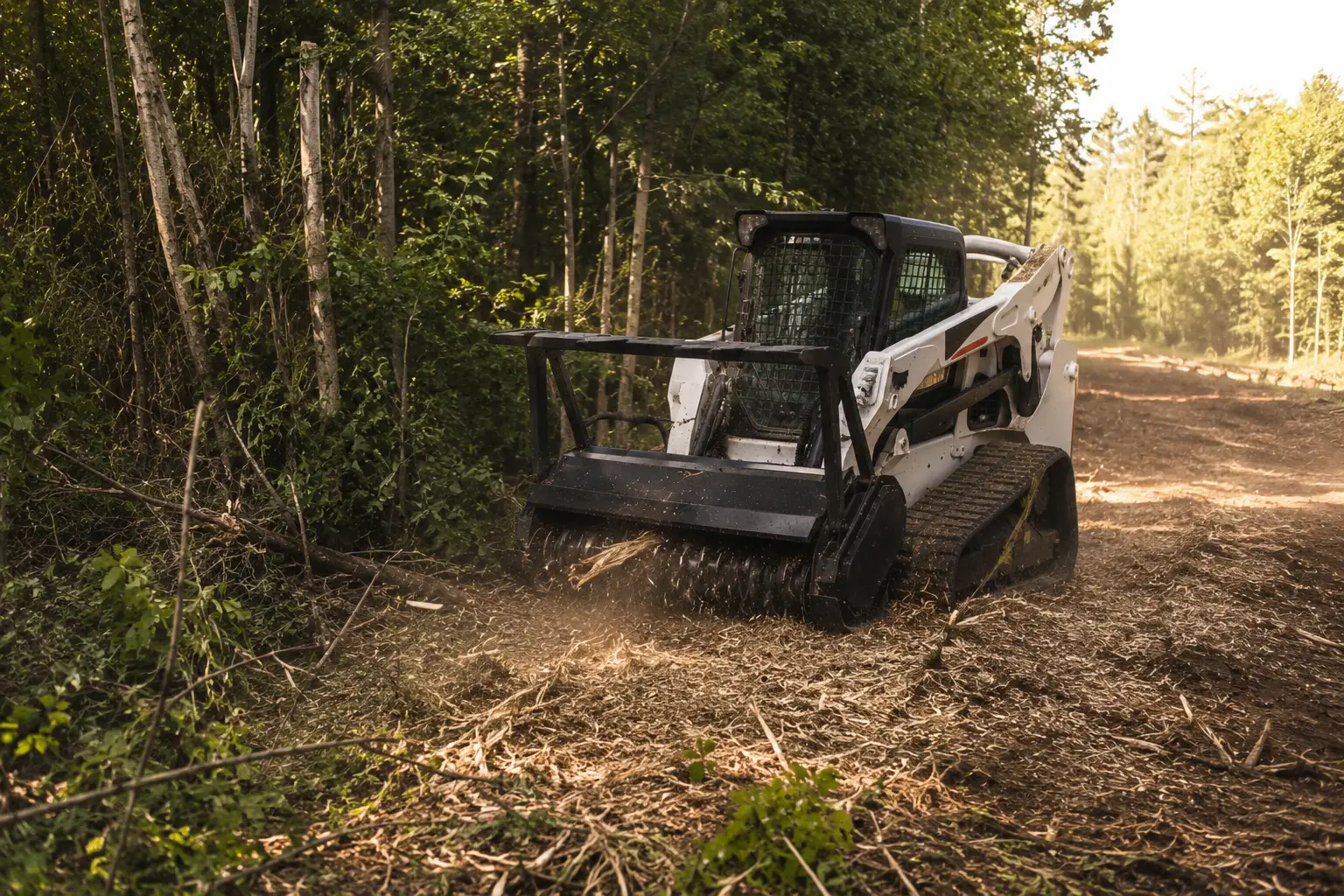
Forestry mulching processes trees and brush on the property instead of leaving a burn pile or requiring a separate haul-off step. The resulting material can protect soil, but it is not automatically the right final surface for every use.
The Southeast Ohio forestry mulching service page describes on-site processing with a skid steer and mulching attachment. The complete forestry mulching guide explains why the mulch layer can help reduce the impact of rain and add organic material as it breaks down.
Keep useful mulch spread
A thin, even layer can soften rainfall on exposed ground and slow the first stages of erosion. Leave useful material in place where it is spread evenly and does not block drainage. Keep it out of streams, ditches, culvert openings, and low areas where it can wash into a waterway.
Did You Know? Ohio EPA describes temporary stabilization as short-term cover for bare soil while conditions wait for vegetation. It is not a permanent answer for every slope or property use.
Watch for thick piles against tree trunks or large mats that hold water. If mulch is deep, packed, or blocking the final use, ask the clearing contractor how much should move and where it can go.
Move mulch where the next use requires it
A building pad, trench, driveway base, or direct seed-to-soil area may need a different surface. Do not bury wet topsoil under stone to hide an access problem. Let the ground carry the next load, then build the surface for the traffic and drainage it will handle.
The goal is not to remove every chip. Leave each part of the property ready for its job.
Pro Tip: Walk the property with a printed site sketch. Mark mulch to keep, mulch to move, wet ground, future structures, and access routes before scheduling the next machine.
Match the Follow-Up to the Property’s Purpose
A usable property is not defined by one finish. Decide what the land will become before choosing the next service.
Homesites and building areas
A future homesite may need a survey, septic review, driveway plan, utility layout, drainage work, excavation, and final grade. Clearing opens the site, but it does not replace those design and approval steps. Confirm the layout before moving more equipment, and have the appropriate professional review water flow on sloped ground.
Pasture and agricultural ground
Pasture and farm ground need a soil-first plan. Test the soil before buying lime, fertilizer, or seed. Choose seed for the soil, slope, sunlight, and intended use. A bare area that looks ready for seed may still be too wet, compacted, or covered with material that blocks seed-to-soil contact.
Ohio State University Extension explains that soil structure, compaction, and water movement affect soil health. Its guidance emphasizes minimizing compaction, reducing disturbance, and building organic matter. Read the Ohio State physical soil health guidance before choosing the finish for a field or pasture.
Pro Tip: Test soil before buying amendments or seed. A simple test can prevent spending money on a mix that does not fit the ground.
Trails, hunting access, and fence lines
Trails need a route that sheds water instead of acting like a ditch. Check wet pockets, steep grades, stream crossings, and runoff. For fence lines, mark corners, gates, and the space needed for future mowing or repair while keeping drainage paths open.
Protect Soil While the Ground Settles
Ohio soil can look firm on top while remaining soft below. If soil smears, sticks to equipment, or holds water in a test hole, delay finish work. Repeated passes over wet ground can compact soil and create later drainage problems.
Keep equipment off stream banks and soft slopes. Repair small ruts and washouts early, before a storm turns them into larger channels.
Pro Tip: Mark the firm access route with stakes before the next machine arrives. A visible route keeps avoidable tire traffic off the rest of the property.
Where ground is bare and rain can move soil, ask a local conservation office or qualified contractor about temporary cover. The Ohio EPA’s mulch temporary stabilization guidance describes short-term cover for bare soils while conditions are not ready for temporary or permanent vegetation. That construction guidance does not make one method right for every rural property, so apply it to the site’s actual slope, soil, water flow, and planned use.
Build a Simple Handoff Plan
Before the next contractor arrives, write down:
- What will this part of the property become?
- Which trees, landmarks, drainage paths, and utilities must stay protected?
- Where is the ground firm enough for traffic?
- Which mulch should remain, and which material needs to move?
- What approvals, surveys, tests, or utility checks come before the next machine?
Share the photos, marked sketch, and answers with the next contractor. A clear handoff prevents one crew from undoing another crew’s work.
The Ohio land-clearing guide can help you review the larger sequence before you schedule follow-up work.
Frequently Asked Questions
What should I do first after forestry mulching?
Walk the property after rain and mark water paths, soft ground, exposed soil, drainage features, utilities, and the areas that must stay. Then decide what each cleared section will become before ordering grading, seed, stone, or another equipment pass.
Should I remove the mulch after forestry mulching?
Not always. A spread layer can protect exposed soil and add organic material as it breaks down. Move mulch where it blocks drainage, covers a building pad or trench, forms a wet pile, or prevents the seed-to-soil contact required for the next use.
How long should I wait before grading after forestry mulching?
Wait until the soil is firm enough to carry equipment without smearing, rutting, or sticking heavily to the tires or tracks. The right timing depends on soil, slope, rainfall, and the planned finish, so inspect the ground instead of relying on a calendar date.
Can I seed immediately after forestry mulching?
Only if the soil, seed choice, surface, and weather fit the plan. Thick mulch, wet ground, compaction, and poor seed-to-soil contact can work against establishment. Test the soil and ask a local conservation office or qualified agronomist for site-based seeding guidance.
Give the Land a Clear Next Job
Forestry mulching opens access, visibility, and options. The next job is to protect those gains. Walk the property after rain, keep water moving where it belongs, leave useful mulch spread, and hold equipment off soft ground. Then choose the follow-up work based on the land’s purpose, whether that is a homesite, pasture, trail, hunting route, or fence line.
Southeast Ohio Forestry Mulching is an owner-operated service based in Cambridge, Ohio. Ben Kirkman and the company serve landowners across the surrounding region with forestry mulching and related clearing work. Visit the contact page to request a free project estimate and discuss what your property needs after the clearing pass.