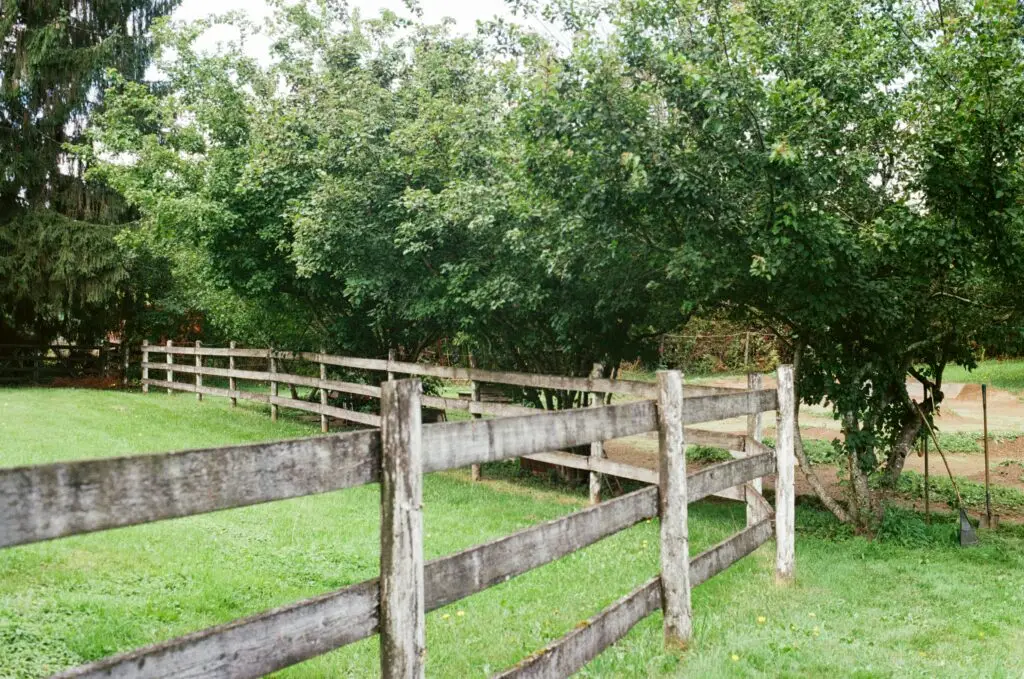
A fence line that’s been overgrown for years isn’t just an eyesore — it’s a structural problem. Brush, vines, and saplings that grow into wire fencing trap moisture, add weight, and eventually push the fence down entirely. For farm and rural properties across Guernsey County, fence line clearing is one of the most practical maintenance services available, and Southeast Ohio Forestry Mulching handles it with the same skid steer and forestry mulcher that makes us effective on every other vegetation removal job. Ben Kirkman runs every job personally, which means you’re not coordinating with a crew that doesn’t know your property. Call 844-685-4861 for a free estimate and let’s talk about what your fence lines need.
What Fence Line Clearing Actually Involves
Fence line clearing is the process of removing the vegetation that has grown into, around, and over a fence line — restoring clear access to the fence itself and to the property boundary it defines. The work can range from cutting back a season or two of light growth to reclaiming fence lines that have been buried in brush thickets for a decade. We work along the length of the fence using the skid steer and forestry mulcher attachment, grinding saplings, vines, briars, and heavy brush into mulch that settles on the ground. The mulcher processes material on site — no piles to burn, no debris to haul. Because the vegetation is ground rather than pulled or pushed, the fence structure itself is far less likely to be disturbed in the clearing process. For severely overgrown lines, the reclamation work involves cutting back growth in layers, working carefully to preserve intact fence sections while removing everything that doesn’t belong there.
Our Fence Line Clearing Process
Step 1 — Walk the Fence and Free Estimate
Ben walks the fence line before any work is scheduled. He notes the overall length, growth density, fence structure condition, and any sections where the fence is already under stress from vegetation. You get a clear estimate and an honest read on what the clearing process will involve.
Step 2 — Equipment Positioning and Access Planning
Fence line work requires working in a linear corridor, often with restricted equipment access on one or both sides. We plan the approach to maximize clearing efficiency while keeping the skid steer at safe distance from intact fence posts and wire.
Step 3 — Systematic Mulching Along the Fence Line
The mulcher head cuts through vegetation along the fence line in passes that clear the growth while preserving the fence itself. Saplings, vines, and briars that have grown into the wire are addressed carefully — the mulcher grinds the material away rather than pushing or pulling it, which protects the fence structure.
Step 4 — Detailed Work on Problem Areas
On heavily overgrown sections, we make additional passes to address root crowns and residual growth close to the fence posts. Areas where vines or tree limbs have grown directly through the fence wire require careful attention — we work those sections at reduced speed.
Step 5 — Final Inspection and Customer Walkthrough
Ben walks the cleared fence line with you, confirming the vegetation is removed, the fence structure is intact where it was intact before we started, and the boundary line is clearly visible again. You leave the conversation knowing exactly what was done and why.
Serving Cambridge and the Surrounding Region
We clear fence lines for farm and rural properties throughout Guernsey, Muskingum, Morgan, and Noble counties, as well as reaching into Coshocton and Perry counties within our 60–80 mile radius from Cambridge. Many of the fence lines we work on in this region run across significant acreage — the kind of working farm boundary that stretches hundreds of feet through mixed terrain. Properties near Byesville, Caldwell and McConnelsville regularly come to us for this work, as do landowners along the creek-bottom and hillside properties near Seneca Lake and Salt Fork. Visit southeastohiomulching.com to confirm coverage in your area.
The terrain throughout southeast Ohio’s Appalachian foothills creates fence line conditions that go beyond what a typical rotary cutter handles. Hillside fence lines with mature multi-stem growth, creek-bank fences overgrown with invasive multiflora rose and wild grape, and field-edge boundaries where saplings have turned into 4-inch trees are all common here. Our forestry mulcher attachment processes that kind of growth efficiently — which is why landowners with complex fence line conditions call us rather than reaching for equipment that was never designed for the job.
Why Landowners Across Southeast Ohio Trust Southeast Ohio Forestry Mulching
Fence line clearing requires the kind of precision that comes from actually running the equipment yourself — knowing exactly where the machine is relative to the fence at all times. Because this is an owner-operated business, that precision is built in. Read about our approach and experience, and see why working directly with the operator matters for fence line work in particular.
Overgrown fence lines on agricultural land can become a liability issue in addition to a maintenance headache — livestock containment depends on intact, visible fence structure. Addressing overgrowth before it collapses a fence line is significantly less expensive than post-collapse repair and replacement. For guidance on fence line vegetation management and its impact on structural integrity, the Ohio State University Extension publishes agricultural best practices relevant to Guernsey County landowners.
Frequently Asked Questions: Fence Line Clearing in Cambridge, OH
My fence line hasn’t been touched in 10+ years — can you still clear it?
Yes. Heavily overgrown fence lines are common on southeast Ohio properties that have seen a change of ownership or years of neglect. We assess the growth density and fence condition during the estimate and give you an honest picture of what the clearing process will involve on your specific fence line.
How close can the mulcher get to the fence without damaging it?
The mulcher head processes vegetation without the pushing and pulling that damages fence structures. We work carefully along the fence, operating at safe distance from posts and wire. Areas where growth has grown directly into the wire require slower, more detailed work. We discuss fence condition specifics during the estimate.
Will you remove the cut brush or leave it on the ground?
With our forestry mulcher, all vegetation is ground on site and left as mulch — there is nothing to haul or burn. This is a major advantage over chainsaw-and-brush-pile approaches that leave a second mess to manage.
Can fence line clearing be combined with other services?
Yes, and it frequently is. Fence line clearing pairs naturally with land clearing, lot clearing, and brush hogging when a property project involves multiple needs. We can scope everything together when you request the estimate.
Do I need to be on site while the work is done?
Not necessarily. As long as we have clear property access and a mutual understanding of the clearing plan, Ben can work independently. We’ll confirm everything before starting, and you can check in at any point.
Related services: Land Clearing | Brush Hogging | Lot Clearing