Southeast Ohio’s wooded properties are some of the most rewarding land to own — and some of the most difficult to access when the timber closes in. If your acreage has hunting stands you can no longer reach, sections you haven’t been able to walk in years, or a wooded corridor that needs to be passable for equipment or recreation, Southeast Ohio Forestry Mulching cuts and clears trails through wooded and overgrown terrain throughout Cambridge and the surrounding region. We use our skid steer and forestry mulcher attachment to cut defined paths through the woods, grinding everything on site so there’s no debris piled along the trail edges afterward. Ben Kirkman runs every job personally. Call 844-685-4861 for a free estimate and let’s talk about where you need to go.
What Trail Cutting Actually Involves
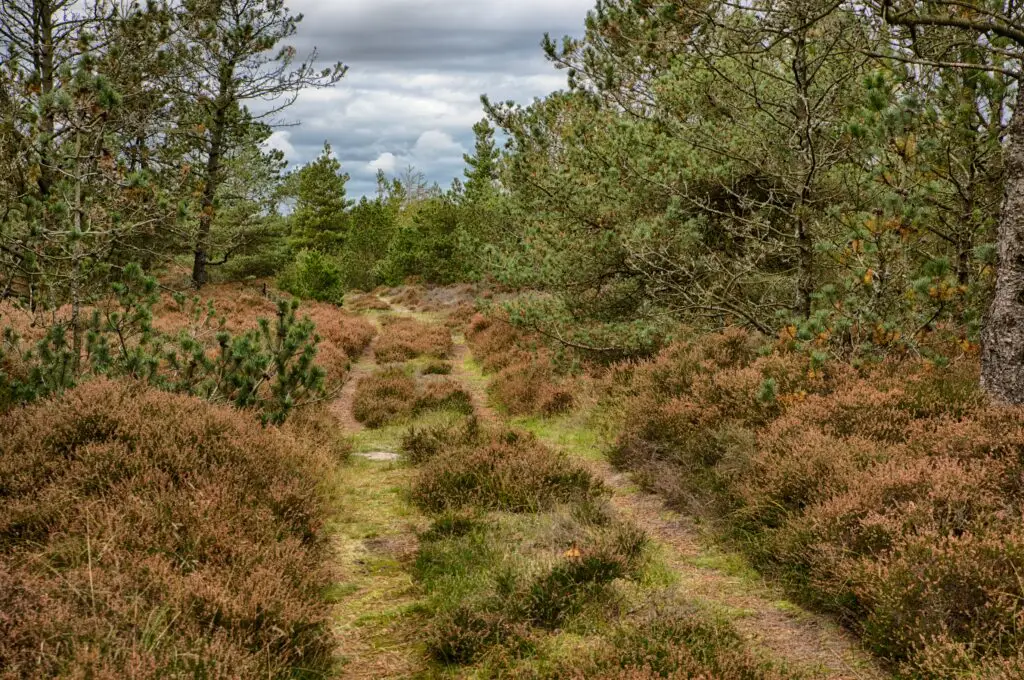
Trail cutting is the process of clearing a defined path through woods, heavy brush, or overgrown terrain. We use the skid steer and forestry mulcher to work along the planned trail route, cutting through trees, saplings, undergrowth, and brush that block the path. Everything is processed on site — mulched into chips that settle on the trail surface and along the edges. The result is a clear, defined path with no debris piles and no vegetation blocking the route. Trail dimensions are discussed before we start: a walking trail for hunting access runs narrower than an ATV path, and an equipment access trail for a rural property needs wider clearance still. We follow the route you specify, adjusting for any terrain obstacles that require a slight variation, and we walk the line with you before the first mulcher pass if you want to do that. The process is efficient enough to cut significant trail length in a single mobilization, and the mulched surface left behind is far cleaner to walk or ride than a hand-cut trail through timber.
Our Trail Cutting Process
Step 1 — Route Planning and Free Estimate
Ben walks the proposed trail route with you, or reviews it based on your property description and objectives. He notes timber density, significant grade changes, any very large trees or obstacles along the planned line, and access points for equipment entry. You receive a scoped estimate and an honest read on what the trail will look like when it’s done.
Step 2 — Equipment Access and Staging
Trail cutting typically requires accessing the woods from one or more entry points with the skid steer. We plan the equipment access approach carefully to minimize disturbance to the area around the trail entry and to preserve the landing area at trail termination points.
Step 3 — Systematic Trail Clearing Pass
The mulcher head works along the trail route, cutting trees, saplings, and undergrowth along the path. Trail width is controlled by the pass pattern — we can cut a narrower walking path or widen to ATV or equipment width as specified. The mulched material settles on the trail floor and edges immediately.
Step 4 — Overhead Clearance and Detail Work
Following the primary pass, we address any overhead limbs or canopy intrusions that affect trail usability. For ATV and equipment access trails, overhead clearance matters; for walking trails, the threshold is lower. We discuss this in the scoping conversation and apply it during detail work.
Step 5 — Trail Walkthrough and Handoff
Ben walks the completed trail with you. You see the full route in its cleared state — the path is defined, the debris is processed, and the trail is immediately usable for its intended purpose. Whether it’s a hunting access route through the hardwood timber or a recreational path across your rural acreage, the property is open to you again.
Serving Cambridge and the Surrounding Wooded Properties
We cut trails for landowners throughout Guernsey, Muskingum, Morgan, Noble, and Coshocton counties, with regular project areas in the heavily wooded terrain around Salt Fork State Park, along Seneca Lake’s wooded shoreline properties, and in the hardwood ridges and creek bottoms of Morgan and Noble counties. Southeast Ohio’s deer hunting culture means trail cutting for stand access is one of our most common requests — and the rolling hardwood timber of Guernsey County is exactly the terrain where a well-cut trail makes the difference between a productive season and inaccessible timber. We also cut trails for ATV access, general recreational use, and property maintenance routes on larger rural parcels. Learn more about our service coverage at southeastohiomulching.com.
The wooded terrain of southeast Ohio — mixed hardwood stands of oak, hickory, and maple on Appalachian ridgelines, with creek-bottom cover of sycamore, ash, and heavy undergrowth — creates trail cutting conditions that reward experience with the equipment. A trail cut through standing timber is only useful if it follows the terrain sensibly, clears the canopy where it matters, and leaves a surface that doesn’t become a muddy obstacle after the first rain. Ben’s decades of equipment operation in this region bring that kind of practical judgment to every trail job.
Why Southeast Ohio Landowners Choose Southeast Ohio Forestry Mulching for Trail Work
Trail cutting is personal — it’s about accessing your property the way you want to use it. Working with an owner-operator means the person making decisions about where exactly to cut, how wide to run the path, and how to handle specific terrain challenges is the same person who gave you the estimate and who you’ll call with any questions afterward. Learn more about Ben and how we work. Free estimates available Monday through Saturday, 7 AM–5 PM.
Frequently Asked Questions: Trail Cutting in Cambridge, OH
How wide can you cut a trail through the woods?
Trail width is adjustable based on its intended use. A foot-path for hunting access runs narrower than an ATV trail, and an equipment access path needs wider clearance. We discuss the specific width requirement before any work starts and cut to your specification.
Will you follow a specific route I have planned?
Yes. We work from your planned route, walking it with you before the first pass if you’d like. Ben adjusts for any terrain features — significant grade changes, large rock outcroppings, drainage features — that require a minor variation from the planned line.
Can you cut trails on the steep terrain common in Guernsey County?
We assess slope conditions before committing to any trail work. Many of southeast Ohio’s typical slopes are workable; extreme grades create equipment safety concerns. We’ll give you a straight answer about what’s feasible on your specific terrain during the site walk.
What happens to the trees and brush you cut along the trail?
Everything is mulched on site using the forestry mulcher attachment. The trail is left clear, with processed material settled in place on the trail floor and edges. There are no brush piles to navigate around or logs left blocking access.
How long does trail cutting take?
Short access trails can be completed in a half day or less. Longer trails through heavy timber take more time. We provide a realistic estimate based on trail length, terrain, and timber density — not a generic range.
Can you cut trails for hunting access before deer season?
Yes, and it’s one of our most common seasonal requests. Plan ahead — we have a 60–80 mile service radius and schedule fills up as hunting season approaches. Call 844-685-4861 as early as possible to get on the schedule.
Related services: Forestry Mulching | Land Clearing | Brush Hogging