A flail mower and a brush hog both cut rough vegetation, but they do it differently. A flail mower uses many small swinging blades on a horizontal rotor and typically leaves finer cuttings. A brush hog, or rotary cutter, uses larger blades under a deck to knock back tall grass, weeds, and light brush in open ground. For a landowner, the better choice depends on vegetation, terrain, finish, and obstacles—not the name on the machine.
If you have an overgrown field or pasture, start by describing what is growing there and what you want the area to become. A clean walking path, a manageable hay-field edge, and a young wooded lot are different jobs. Southeast Ohio Forestry Mulching’s brush-hogging service uses a rotary cutter. If you are considering a flail mower, compare its cut with the result you need before requesting work.
How the cutting mechanisms differ
A brush hog cuts and drops rough growth
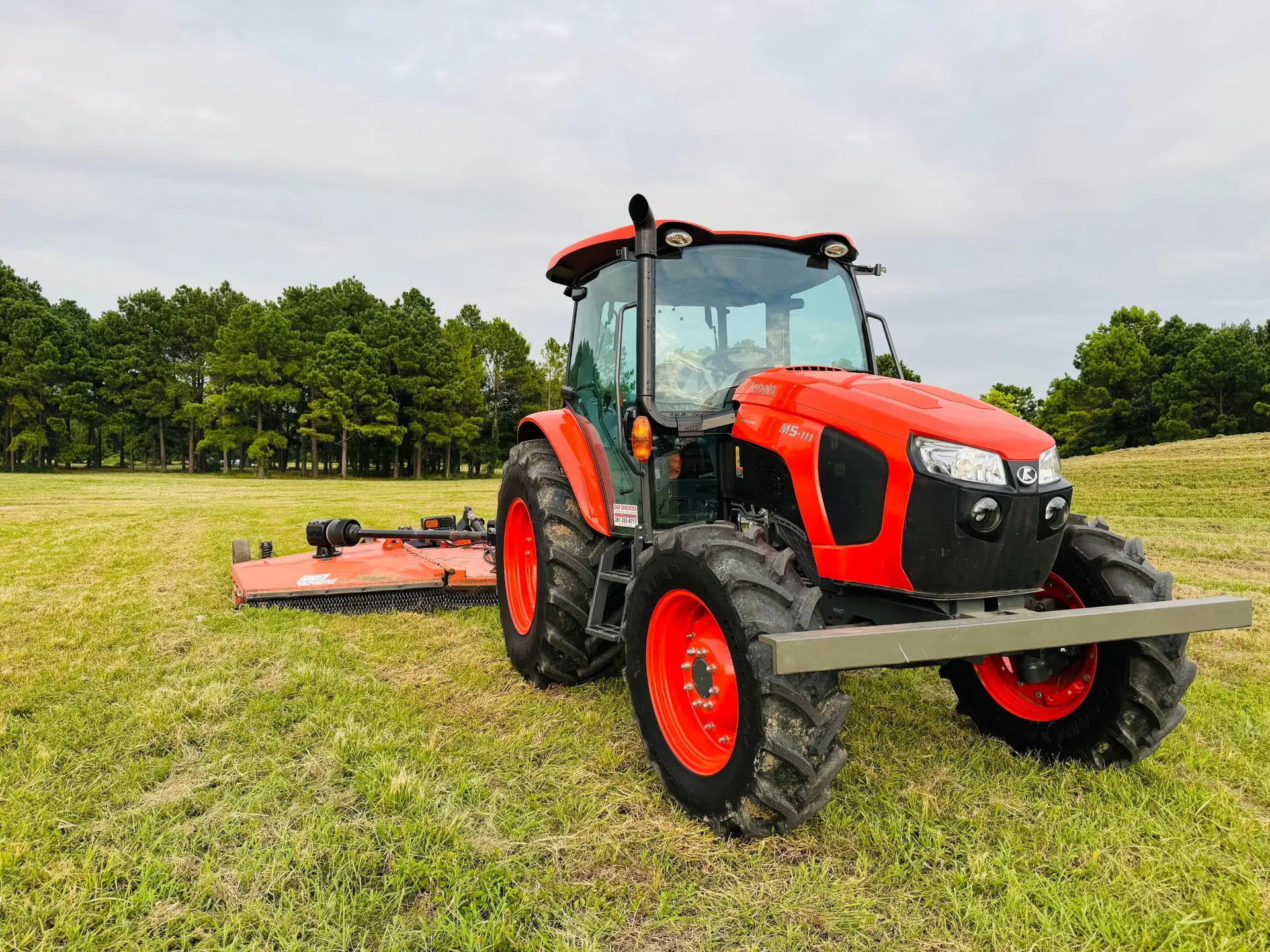
A brush hog is a heavy-duty rotary cutter, often pulled behind a tractor. Large blades swing beneath a deck. It cuts tall grass, weeds, briars, and light woody growth, then leaves the clippings on the ground. LSU AgCenter’s tractor-implement guide describes rotary cutters as rough-cut implements, not finish mowers, and cautions against cutting too low. Capacity depends on the specific machine and blade rating; a generic diameter promise would be misleading.
That distinction matters on a former pasture. If the main problem is tall vegetation in a relatively open area, a rotary cutter can restore access without preparing the ground for a lawn. The cut stems may still be visible afterward. Do not expect a manicured finish or instant bare soil.
A flail mower processes vegetation differently
A flail mower has many small blades or hammers attached to a horizontal rotating shaft. The moving pieces strike and chop the growth, generally leaving shorter material than a rotary cutter. The result varies with blade type, travel speed, crop density, and machine setup. Diamond Mowers’ equipment comparison describes the relative differences in cut and debris handling; it is a manufacturer’s perspective, not a guarantee for every site.
A flail’s smaller cutting elements may suit repeat maintenance where a finer-looking cut matters. But the machine still needs an operator who understands the terrain, hidden objects, and its rated vegetation capacity. Neither tool turns a field of young trees into a finished lawn in a single pass.
Did you know? “Brush hog” is commonly used for a rotary cutter, while “flail” describes a different rotor and blade arrangement. Asking for a “bush hog” is not the same as specifying a flail mower.
Choose by vegetation and the finish you need
Open fields and pasture edges
For tall grass, coarse weeds, and scattered light brush on open ground, brush hogging is a reasonable starting point. Southeast Ohio Forestry Mulching describes fields, pastures, and rough terrain as its use cases. A site walk can reveal whether dense saplings, hidden wire, rocks, wet ground, or steep edges change the plan. “Open” on a map does not mean obstacle-free on the ground.
A flail mower may be preferable when the owner wants smaller clippings and the actual machine is rated for the growth. That is an equipment-selection judgment, not a claim that one machine always wins. Ask the contractor what finish to expect after one pass and whether any later maintenance cut is planned.
Dense woody growth or a path through trees
If small trees, thick vines, and dense brush have taken over, this is no longer simply a mower comparison. Forestry mulching uses a mulching head to process heavier vegetation in place. The company’s land-clearing service addresses broader site objectives. The right scope may combine methods in different zones rather than force one tool through everything.
Before booking a mowing job, mark any trees to keep, the property line, utilities, and access for the machine. Describe the next use: a field that can be maintained, a route to a fence, or an area being prepared for another contractor. The finish requirement should be in the estimate, not assumed from a tool name.
Pro tip: Photograph a representative patch of the thickest vegetation and one of the least accessible areas. Those two views tell a contractor more than a close-up of a clean roadside edge.
Compare risks and operating conditions, not just appearance
Hidden material and bystander safety
Rotary cutters can throw stones and other objects. LSU AgCenter’s implement guidance emphasizes thrown-object hazards and keeping bystanders away. A flail’s enclosed cutting arrangement can change the debris pattern, but it does not make operation harmless. Before anyone cuts, identify scrap metal, wire, bottles, rocks, and areas where people or livestock could approach.
The operator should use the machine’s instructions and guards, choose safe conditions, and stop if an obstacle or bystander enters the work zone. This article is not an operating manual. Ask how the contractor will handle unknown debris and difficult edges rather than relying on a blanket statement that a certain mower is “safe.”
Slope, wet soil, and sensitive areas
Southeast Ohio lots often include uneven pasture edges, ditches, and low spots. The usable tool depends on traction, slope, soil moisture, and the machine’s reach. A heavy machine crossing saturated ground can rut a field regardless of cutting head. A sharp side slope may require a different access plan or no work until conditions improve. Do not promise an acreage-per-day rate before an operator sees the site.
Did you know? A fine-looking cut is not the same as a finished site. If the next task is grading, planting, or building, ask separately about ruts, remaining stumps, cut material, and who handles the next phase.
What to ask before accepting a brush-hogging quote
Scope the actual ground
Show the contractor the acreage or boundary, the thickest vegetation, any wet spots, and the entrances. Tell them whether the job is a one-time knockdown or the start of recurring upkeep. Ask what material the cutter can handle, where it will be left, whether an additional pass is included, and what is excluded. If a brush hog is not a fit for the worst patches, ask whether another clearing method is appropriate for those areas.
Agree on the result
A quote should describe the areas to cut, anticipated finish, obstacles, access, and any disposal or follow-up work. It should not substitute an appealing equipment photo for a written scope. Compare bids against the same end state: an open field, a usable fence line, or a cleared site for another phase. If you need a lawn-quality finish, say that up front; rough-cut mowing is a different service.
Pro tip: Walk the property after the estimate, before the crew starts, and point out the exact areas not to cut. Keep the marked plan with the written scope so a missed corner does not become a dispute later.
Questions property owners ask
Is a flail mower the same as a brush hog?
A flail mower is not the same as a brush hog: it uses multiple small swinging cutters on a horizontal rotor, while a brush hog uses larger rotary blades beneath a deck. Both cut vegetation, but they differ in cutting action, typical finish, and machine-specific limits. Ask which actual attachment the contractor will bring.
Will brush hogging remove saplings and stumps?
A rotary cutter can handle some light woody growth within its rated capacity, but it is not a stump-removal tool. Dense saplings, larger trees, and established stumps may need forestry mulching or another clearing method. Show the contractor the thickest section before accepting a mowing-only scope.
Which leaves smaller clippings?
A flail mower often chops material into smaller pieces, while a rotary cutter commonly leaves longer stems. Actual results depend on vegetation density, blade setup, speed, and the number of passes. If the finish matters, ask to see a comparable job and state the expected result in the quote.
Can I use either machine on a steep or wet field?
Either machine may be unsuitable on a steep or wet field, depending on slope, traction, ground firmness, access, and machine limits. Wet ground may rut, while a steep edge can change the safe approach or rule out the job until conditions improve. A site walk is more useful than an acreage-only estimate.
Pick a method that matches your next use
If you need an open field cut back to manageable growth, rotary brush hogging may be the right first step. If you need finer clippings, compare a correctly rated flail mower with the actual site conditions. If the job includes thick saplings or trees, discuss forestry mulching instead. The equipment decision follows the property goal—not the other way around.
Southeast Ohio Forestry Mulching offers brush hogging with a rotary cutter and free on-site estimates around Cambridge. Request a property walk-through to discuss the vegetation, access, and finish you need.