Forestry mulching is a land clearing method that uses a skid steer fitted with a rotary mulcher attachment to grind trees, brush, and undergrowth into mulch right where it stands. There’s no burn pile, no debris hauling, and no separate cleanup phase. Most residential projects finish in a single day, and the cost typically runs 30 to 50 percent less than bulldozing because there’s no haul-off step to pay for.
Here’s the part that surprises a lot of first-time customers: the same mulcher that clears a flat half-acre lot near Cambridge in a couple of hours works completely differently on a creek-adjacent property with steep grades two counties over. The machine doesn’t change. The ground does. We’ve run mulching equipment on both kinds of terrain throughout Guernsey, Muskingum, Morgan, and Noble counties, and that difference in terrain is exactly what this guide walks through, along with what the process costs, when it’s the right call, and what your land looks like once it’s done.
What Forestry Mulching Actually Is
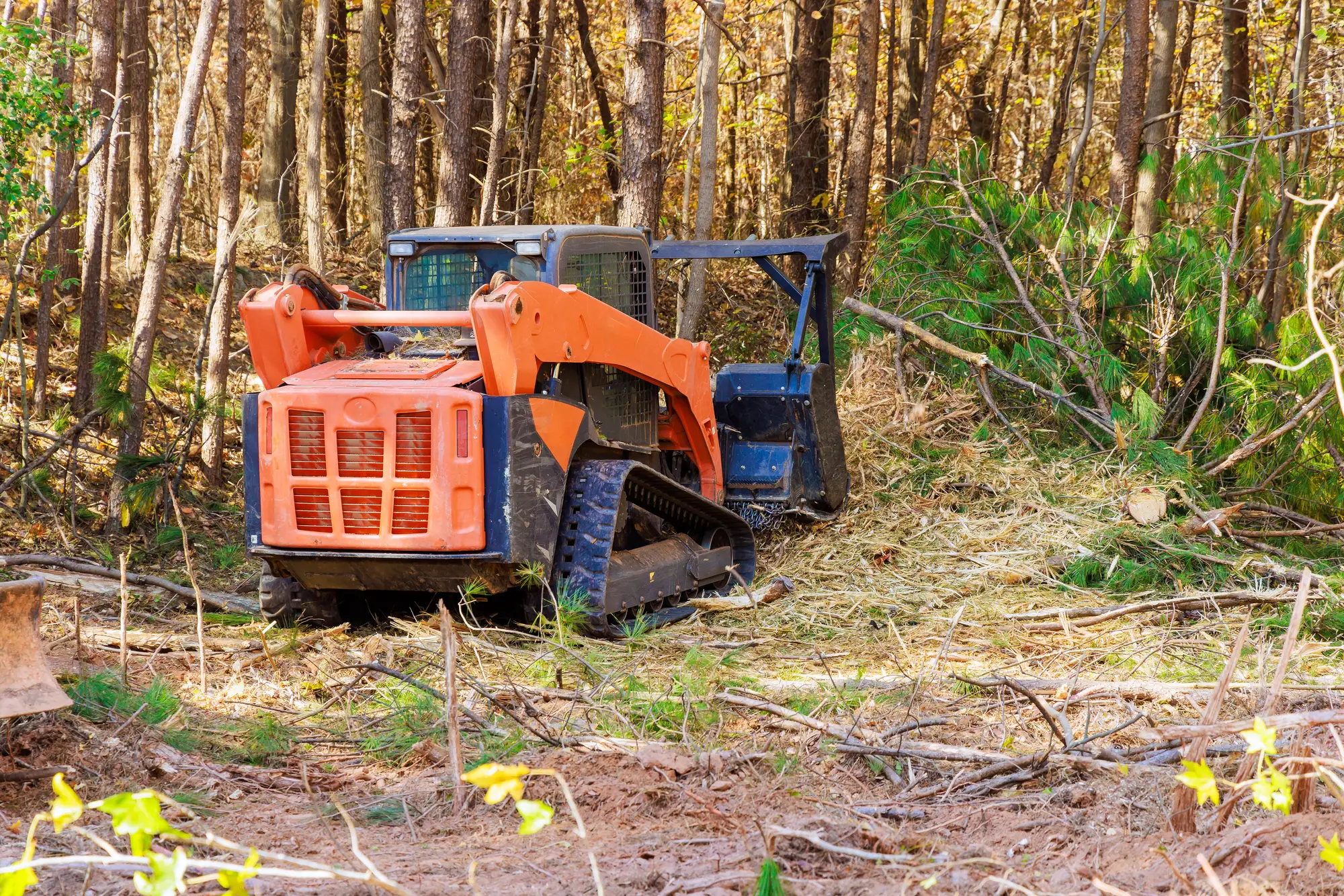
Forestry mulching uses a heavy-duty rotary drum fitted with carbide teeth, mounted on a skid steer, to cut through trees, saplings, vines, and dense brush in a single pass. The material gets shredded into small pieces that settle back onto the soil instead of getting piled, burned, or trucked away.
That single detail changes everything else about the project. No burn pile means no burn permit to track down. No hauling means no dump fees and no truck staging on a property that might not have room for one. The mulch layer that’s left behind also isn’t waste. It breaks down over time and adds organic matter back into the ground.
Did You Know? A layer of organic mulch left on bare soil absorbs the impact of rainfall instead of letting it strike the ground directly, which is one of the main reasons mulched land resists erosion better than land that’s been bulldozed and left bare.
How the Equipment Works on Different Terrain
A skid steer is compact and maneuverable, which matters more in southeast Ohio than it would on flat midwestern farmland. Our region mixes wooded hillsides, creek bottoms, and older farm ground that’s grown in over decades. A mulcher can work that variation without needing staging areas for debris or wide turning radius for bigger equipment like a dozer.
Pro Tip: If your property has any slope to it at all, ask your contractor directly how their equipment handles grade. A skid steer mulcher built for hillside work moves differently than one set up for flat lots, and that difference shows up in both safety and finish quality.
What Forestry Mulching Costs
Pricing depends mainly on vegetation density, acreage, and terrain. A lightly grown-in field costs less to clear than dense woodland with mature trees and thick undergrowth, simply because there’s more material for the mulcher to process. Terrain adds its own factor. Steep or wet ground takes longer to work safely, and that time shows up in the final price.
Why Mulching Often Costs Less Than Other Methods
- No haul-off fees: Material stays on site as mulch instead of getting trucked to a disposal site, which is one of the biggest cost differences between mulching and bulldozing.
- No burn permit logistics: Open burning requires permits and weather-dependent timing in many Ohio townships. Mulching skips that step entirely.
- Fewer equipment passes: A single mulcher pass often replaces cutting, piling, and a separate clearing pass that other methods require.
- Faster completion: Many residential lots finish in a single day, which means less time billed overall.
Did You Know? Mulching commonly runs 30 to 50 percent less than bulldozing and hauling for comparable residential projects, mainly because there’s no separate debris removal phase to fund.
When Forestry Mulching Is the Right Call
Forestry mulching works well for a wide range of situations, but it’s not the only clearing method out there, and matching the method to the goal matters.
Reclaiming Overgrown Land
Residential landowners who haven’t touched a back acre in years are some of our most common calls. A property that’s grown in with saplings, vines, and brush over a decade clears down to usable ground in a single pass, without the property looking torn up afterward the way bulldozing can leave it.
Preparing Agricultural Ground
Farmers dealing with fence line encroachment or pasture invaded by brush get a similar benefit, but the goal is different. Restoring grazing or crop ground means thinking about what grows back, not just what gets cleared, so we walk through what to expect for regrowth and ground cover before starting. Ohio State University Extension’s guide to forest harvesting and regeneration methods is a useful resource if your property includes managed woodland alongside the area you want mulched.
Getting a Building Site Ready
For a home site or outbuilding pad, mulching clears the vegetation, but grading and other site prep usually follow as a separate phase. Mulching gets you to bare, workable ground faster than a method that leaves brush piles or stumps to deal with first.
What Land Looks Like After Forestry Mulching
Right after a mulching pass, the ground is covered in a layer of shredded wood and plant material rather than bare dirt. That mulch layer isn’t just leftover debris. Ohio State University’s soil health program lists constant ground cover, including mulch, as one of the most effective ways to protect topsoil from erosion, which matters on the sloped and clay-heavy ground common across this region.
Stumps are typically ground down rather than left standing, though very large or hardwood stumps can vary depending on size. If you have specific plans for the land, like seeding, tilling, or building, we talk through the right follow-up approach during your estimate so the mulch works for your plan instead of against it.
Hiring the Right Contractor for Your Property
Equipment that handles flat ground easily can struggle on southeast Ohio’s hills and creek bottoms. Ben Kirkman, our owner, has run heavy equipment since he was 14 years old, and that background shapes how we read a property’s terrain before the first pass, not after something doesn’t go as planned.
Questions Worth Asking Before You Hire
- Has the contractor worked on terrain similar to yours, slopes, creek bottoms, or heavy clay?
- Does the estimate include stump processing, or is that priced as an extra?
- What’s the realistic timeline for a property your size and vegetation density?
- Is there a written estimate before work starts, or just a verbal number?
If you want to see how forestry mulching compares to other clearing approaches for larger acreage, our land clearing services page breaks down when a different method might fit better. For properties where cleared trails or access routes matter alongside the main clearing, our trail cutting page covers that add-on in more detail.
Forestry mulching gets overgrown southeast Ohio land back to usable ground in a single pass, without burn piles or hauling fees driving up the cost. The right outcome still depends on matching the equipment and approach to your specific terrain, whether that’s a wooded residential lot, working farmland, or a building site on a deadline.
Ready to see what your property needs? Contact us for a free property assessment, and we’ll walk your land and give you a straight answer on cost and timeline.
Frequently Asked Questions
How long does forestry mulching take?
Most residential lots finish in a single day, depending on size and vegetation density. Larger or heavily wooded acreage takes longer. We give you a realistic timeline after walking your specific property.
Is forestry mulching cheaper than bulldozing?
Yes, in most cases. Forestry mulching commonly costs 30 to 50 percent less than bulldozing because it skips the separate hauling and burn pile steps entirely.
Does forestry mulching damage the soil?
Not in most cases. The mulch layer left behind actually helps protect and retain moisture in the soil. Ground disturbance is generally less than with heavier equipment like dozers or trackhoes.
What happens to stumps during forestry mulching?
Stumps are typically ground down as part of the clearing pass. Very large or hardwood stumps can take more time, and we’ll give you an honest read on what to expect during your estimate.
Can forestry mulching work on sloped or uneven land?
Yes. Skid steer mulchers are built to handle varied terrain, including the slopes common across southeast Ohio. We assess the site before work begins to confirm the safest approach for the conditions.